
You know that satisfying pop you get when you squeeze a bubble wrap sheet? That little burst of joy is actually a sign of one of the most efficient packaging tools in the modern warehouse. But here’s the thing—bubble wrap is yesterday’s news. The real game-changer for anyone shipping products is the air cushion machine. I’m not just talking about any inflatable gadget here. I’m talking about a device that turns a flat roll of film into perfectly sealed, cushioned air pillows right when you need them. And if you’ve been wrestling with messy paper, heavy foam, or those pre-made bubble rolls that take up half your storage space, you’re going to want to pay close attention. An air cushion machine is the kind of tool that makes you wonder how you ever survived without it.
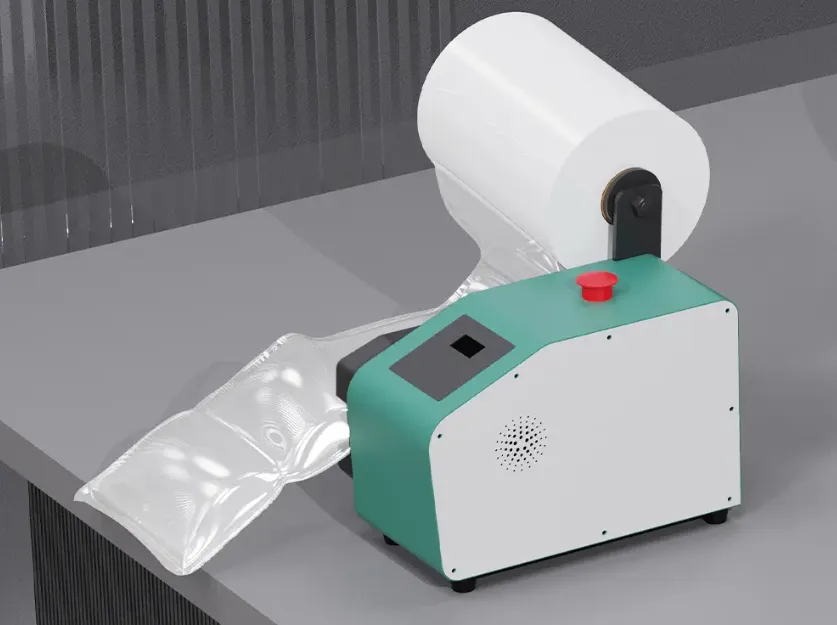
Let’s start with the raw reality of packaging. If you’re a business owner or a warehouse manager, you know that void fill and protective wrapping are non-negotiable costs. But those costs can spiral out of control when you’re buying pre-inflated cushions or bulky materials. Pre-made air pillows might seem convenient, but they’re basically a storage nightmare. They take up massive amounts of space, and you’re paying for the air itself—literally shipping air from a factory to your door. A proper air cushion machine flips that entirely. You buy rolls of film, which are compact and lightweight. When you need cushions, the machine inflates them on demand. This means you’re not storing anything until you’re ready to use it. And that’s just the beginning of why an air cushion machine is worth every penny.
Now, I’ve seen plenty of packaging solutions come and go, but the beauty of an air cushion machine is its versatility. You can adjust the size of the cushions, the length of the seals, even the thickness of the film. Want tiny pillows for small electronics? Easy. Need big, beefy cushions for heavy machinery parts? No problem. Some models even let you switch between continuous rolls or individual pillows. This isn’t just a one-trick pony—it’s a shape-shifter for your shipping department. And the best part? The material itself is often recyclable and made from low-density polyethylene. So you’re not just saving space and money, you’re also cutting down on waste. That’s a triple win that your customers and your bottom line will appreciate.
So how do you choose the right air cushion machine for your operation? That’s where things get a bit personal. Let’s break it down by your needs. If you’re running a small e-commerce business from your garage, you don’t need a massive industrial unit. A compact, tabletop air cushion machine will do the trick. These are often plug-and-play, meaning you set them up in minutes and start producing cushions at a rate of about 10 to 15 linear feet per minute. And yes, that’s fast enough to keep up with a solo packer. On the other end of the spectrum, if you’ve got a high-volume fulfillment center, you’ll want something that cranks out cushions at 60 feet per minute or more, with automated film threading and multiple settings for different cushion sizes. The key is to match the machine’s output to your packers’ speed. Nothing kills productivity like a machine that can’t keep up, or one that’s too fast and wastes film.
But wait—there’s more to consider than just speed. You have to think about the film itself, and this is where a lot of people get tripped up. Some air cushion machines work exclusively with proprietary film, which locks you into buying from one supplier. That’s fine if the price is right, but it can become a trap if costs rise or supply chain issues hit. Look for an air cushion machine that accepts standard roll sizes and film grades. You want the flexibility to choose between recycled content, anti-static film, or even biodegradable options. For example, if you ship sensitive electronics, you’ll need anti-static film to prevent electrostatic discharge from zapping components. Most air cushion machines can handle this if you select the right model and film type.
Another critical factor is the machine’s construction. I’ve seen cheap units that overheat after 20 minutes of use or jam so often that the operator starts throwing things. You want an air cushion machine built with a metal housing, good heat sealing elements, and a simple user interface. Trust me, a touchscreen that’s intuitive is worth more than a dozen bells and whistles. Buttons and dials that are clearly labeled will make training new employees a breeze. Also, look for a machine that has an automatic shut-off feature when the film runs out, or a sensor that pauses the inflation if the roll is misaligned. These little features save film and frustration.
Let’s talk about the actual physics of the cushion. An air cushion machine works by heating a sealing bar that fuses two layers of film together, trapping air in between. The quality of that seal determines whether your cushions hold air for days or weeks. A good seal should be uniform, without gaps or weak spots. I’ve tested machines that produce seals so strong you can stand on the cushion without it bursting—well, maybe not literally, but you get the idea. The machine should also allow you to adjust the temperature and sealing time. Why does that matter? Because different film thicknesses need different heat levels. If you’re using ultra-thin film to save money, you don’t want the machine burning through it. If you’re using thick, heavy-duty film, you need the extra heat to create a reliable bond.
Now, I want to circle back to that website I mentioned earlier, airpowerpak.com. If you take a look at their product page, you’ll see they offer a range of air cushion machines designed for different scales. It’s worth browsing their specs because they highlight something crucial: maintenance. An air cushion machine should be easy to clean and maintain. The film path should be accessible, the sealing bar should be replaceable, and the rollers should be self-lubricating. Nobody wants to spend hours fiddling with a machine when they could be packing orders. Also, pay attention to warranty and support. A company that stands behind their air cushion machine with a solid warranty and responsive customer service is a company that knows their product works.
For the creative packer, an air cushion machine opens up possibilities beyond just square pillows. Some models let you create pouches, tubes, or even custom-shaped cushions that wrap around irregular items. Think about that—no more settling for generic shapes that leave gaps in your box. You can fill every void precisely, reducing the amount of cushion material you use while improving protection. On average, companies that switch to an air cushion machine from paper or pre-made solutions reduce packaging weight by 50% or more. That also reduces shipping costs, which is a huge deal in the era of dimensional weight pricing.
I should also mention the noise factor. Not all air cushion machines are whisper-quiet. Some sound like a small tractor running in your workspace. If you’ve got a busy warehouse, a little noise might not matter. But if you’re in a retail or office environment, look for a model that’s engineered for quieter operation. The good news is that many modern units use high-efficiency fans and insulated compressors that keep the decibel level low. You can still hold a conversation next to the machine without shouting.
Let’s dive into the cost-savings a bit deeper. The initial investment in an air cushion machine can range from a few hundred to several thousand dollars. That might seem steep, but let’s do some back-of-the-envelope math. If you’re currently spending $200 a month on pre-made bubble wrap or foam, and you switch to film rolls at $50 a month, the machine pays for itself in about six months to a year. Plus, you eliminate the waste of partially full rolls of bubble wrap that never get used. With an air cushion machine, you only make what you need. And because the film rolls are so dense, you can store a month’s supply of film in a fraction of the space previously taken by pre-inflated cushions. That freed-up space could be used for inventory or more packing stations.
But here’s a pro tip that many people overlook: the operator’s engagement. When you install an air cushion machine, the packers actually enjoy using it. There’s something oddly satisfying about pressing a foot pedal and watching perfect pillows emerge. It’s almost like a mini assembly line where every step feels productive. That positive vibe translates into fewer errors, less rushed packing, and a lower chance of damage claims. And damage claims are the silent killers of profits. A single broken item in transit can cost you ten times the packaging material you saved by skimping. The air cushion machine helps you avoid those claims by delivering consistent, high-quality protection.
You might be wondering about the environmental angle. I touched on it earlier, but let’s be fully honest. While air cushions are plastic, the fact that they are made from lightweight film and can be recycled in many places makes them a more sustainable choice than foam peanuts or heavy paper. Some air cushion machines even use biodegradable film that breaks down in composting facilities. Not all facilities accept it, but it’s an option. My advice? If your brand values sustainability, look for a machine that works with film certified as compostable. You can also encourage customers to reuse the cushions—just pop the air out and flatten them for return shipments. That’s a win-win.
One more thing to consider is the reliability of the seal. I’ve seen machines where the heating element degrades after a few thousand cycles, leading to weak seals that leak air. A quality air cushion machine uses durable ceramic or Teflon-coated sealing bars that last for tens of thousands of cycles. When you shop, ask about the life expectancy of the sealing element and how often it needs replacement. Some manufacturers offer lifetime warranties on the sealing bar, which is a sign of confidence. Similarly, check the film feeding mechanism. If it uses rubber rollers that slip over time, you’ll get inconsistent cushion lengths. Look for geared or toothed rollers that grip the film securely.
And here’s a little secret that packaging pros know: the best air cushion machine for you might not be the most expensive one. It’s the one that matches your typical order size and packaging volume. If you pack 50 orders a day, a $10,000 industrial unit is overkill. If you pack 5,000 orders a day, a $500 unit will frustrate you to no end. Take the time to calculate your daily cushion usage. You can do that by counting the number of boxes you ship and estimating the void fill needed per box. Then multiply by the average cushion length (usually 6 to 12 inches). This gives you a rough feet-per-day figure. Compare that to the machine’s output speed. Always leave a 20% buffer so the machine isn’t running at full capacity all day, which can cause unnecessary wear.
I want to wrap up the practical advice with a story from a real packaging manager I spoke with. She runs a mid-sized gift basket company and used to fight with paper void fill every winter. The paper would dry out her hands, it was dusty, and it took forever to fluff up. She switched to an air cushion machine, and within a month, her packing time dropped by 30%. Her team loved the clean, quiet operation. Plus, customers started commenting on how nicely packed the baskets were—no shifting in the box, no crushed items. That kind of customer experience is priceless. And it all started with a click on a website and a decision to invest in better equipment.
When you finally choose your air cushion machine, don’t forget to train your team properly. Even the best machine is only as good as its operator. Spend 30 minutes showing them how to adjust the cushion length, change the film roll, and clean the sealing bar. Create a simple cheat sheet that sits near the machine. And encourage them to speak up if something feels off—like a weird noise or uneven seals. Early detection of problems saves film and prevents downtime. You might even make it a game: who can pack the most boxes with the least film waste? Gamification works wonders in warehouses.
In the end, an air cushion machine isn’t just another piece of packaging equipment. It’s a shift in how you think about protection, efficiency, and waste. It puts control back in your hands—literally. You decide when to make cushions, what size, and what type of film. You no longer rely on factory-filled pillows that may or may not arrive on time. You become the producer of your own packaging material. And that independence, when you’re running a busy shipping operation, is pure gold. So go ahead, browse the options, including those at airpowerpak.com. Look at the features, read the reviews, and ask for a demo if possible. But most importantly, don’t overthink it. The right air cushion machine will transform your workflow faster than you expect.
One last thought: keep experimenting. Once you have the machine, try different film thicknesses. Test how cushions behave in cold temperatures (if you ship to cold climates, the air pressure inside can drop, making cushions softer). A good air cushion machine with adjustable inflation settings can compensate for that. You can also combine cushions with other materials—like a layer of kraft paper on top for a premium feel. The possibilities are endless. And every time a customer receives a product with zero damage, you’ll smile knowing that an air cushion machine was behind that protected package. That’s the real story here, and it’s one worth repeating to everyone who thinks bubble wrap is still the best option. It’s not. The future is on-demand, compact, and smart. The future is the air cushion machine.