
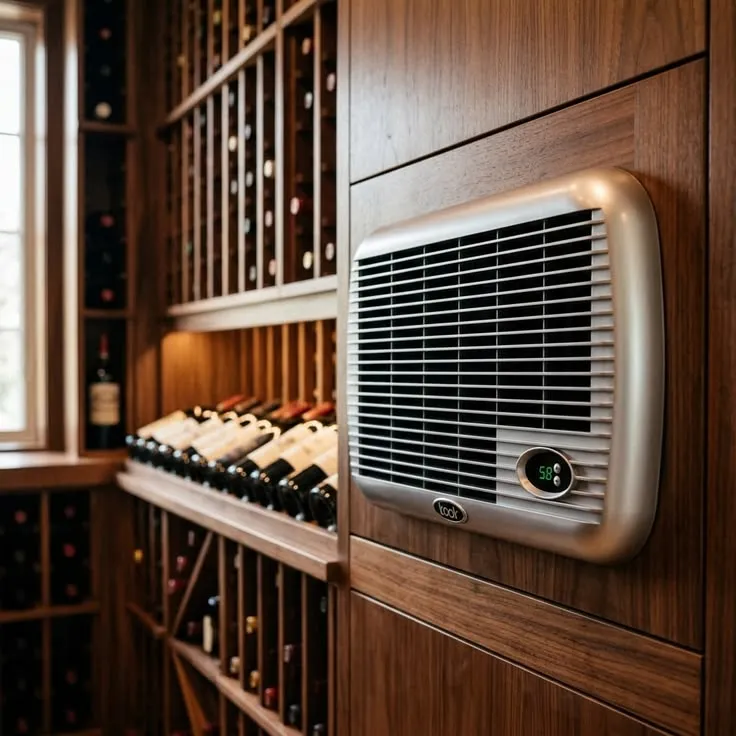
A wine cellar needs more than attractive racks and carefully selected finishes. Maintaining a stable environment is an important part of creating suitable wine storage, which makes cooling equipment a decision worth considering early. Choosing a wine cellar cooling system based only on room size or price can overlook important details. The room’s construction, insulation, location, door, and expected use can all affect which cooling approach makes sense.
Start With the Cellar’s Actual Conditions
Each wine cellar is unique. A room in a house that is isolated from other cooler rooms may require a different cooling solution than another, larger room in a house with warmer rooms surrounding it. The type of equipment required can be affected by the placement of the cellar, the kind of wall construction, ceiling height, the design of the door(s) and the quantity of neighboring heat.
Take into account the entire room when choosing equipment, rather than equipment alone. If you know the issues, you will have a better foundation to base your discussions with the professional on the appropriate options.
Understand Why Insulation Matters
Cooling equipment is an integral part of a larger system. The unit may have to do more work to keep the environment desired if the room is poorly insulated.
During the planning of the cellar, the construction of insulation, vapor control, walls, ceiling, floor and doors should therefore be taken into account. These components can help to produce a more effective enclosure.
This is important especially if the new cellar is being constructed within a pre-existing section of the house. An existing room may require extra work to become a proper wine storage area.
Compare Different Cooling Requirements
Not every cellar requires the same type or capacity of equipment. When comparing wine cellar cooling units, homeowners should consider the dimensions and construction of the space rather than selecting a model solely because it is marketed for wine storage.
It is also a function of the environment to which the product is subjected and the surrounding conditions for its use. Appropriateness of a specific unit to the planned room can be determined with a professional assessment.
There may be practical issues with oversizing or undersizing equipment, as well – and it’s more helpful to size equipment to the actual rather than the maximum application.
Think About Equipment Location
Where the cooling equipment is installed can affect both appearance and practicality. Some systems can be positioned within the cellar, while other configurations may allow components to be located outside the main storage area.
The available installation space should be considered before the cellar layout is finalized. Equipment needs adequate conditions for operation and may require access for future service.
Planning its location early can also prevent an otherwise attractive cellar from having equipment positioned in an inconvenient or visually distracting place.
Consider the Door and Access Pattern
A wine cellar door is another factor that can influence cooling requirements. Frequent opening allows conditioned air to escape, while a poorly suited door may make temperature management more challenging.
This is particularly important for a cellar that will be used frequently. A private collection might not see many customers during the day, and a cellar that is part of an entertaining area may have more customers open it at some point during the day.
Consider how people will occupy the room to develop a more realistic cooling plan.
Know When Professional Advice Helps
Choosing equipment can become complicated when the room has unusual dimensions, glass sections, limited ventilation, or challenging surrounding conditions. This is where speaking with a wine cellar refrigeration expert can be useful.
A specialist can consider the cellar as a complete environment rather than recommending equipment based on one measurement. Questions about insulation, installation location, ventilation, maintenance access and expected usage can then be addressed before the project moves too far forward.
Professional input can also be valuable when replacing an existing unit. The replacement should suit the current room rather than automatically duplicating the specifications of older equipment.
Plan for Long-Term Maintenance
Cooling equipment requires attention to be taken following its installation. Owners should be aware of how the system will be accessed for inspection, cleaning, and/or maintenance, as well as whether there will be adequate working space around relevant components of the system.
When designing, consider how the plan will affect the maintenance in the future, and this will help make it less disruptive. It also prompts homeowners to think of the cooling system as a long-term cellar infrastructure and not a one-off investment.
Conclusion
When homeowners are first choosing cooling equipment, it’s easier to choose the right unit when they first know the room that it will be cooling. The size of the cellar, the insulation, type and location of doors, surrounding conditions, equipment location, and maintenance for the future are all factors that can affect the correct solution. When the requirements are not clear, it is a good idea to consider the full picture rather than going by price or capacity per unit. If you are planning to construct a custom cellar, you can visit the website of customwinecellarsorangecounty.com to learn more and find more information about custom wine storage solutions.