
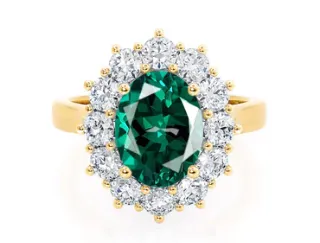
A gemstone ring does more than introduce colour to the hand. It can reflect a personal story, evoke a particular era or offer a distinctive alternative to a conventional engagement ring. The stone may attract the first glance, but the setting determines how that colour is framed, protected and experienced in everyday wear.
Exploring gemstone rings by Lily Arkwright reveals how dramatically a design can change depending on the relationship between gemstone, cut, metal and setting. A rich blue sapphire can appear stately in a classic solitaire, for example, yet distinctly contemporary when placed beside a contrasting emerald in a toi et moi design. Choosing well therefore involves more than simply selecting a favourite colour.
Begin with the Character of the Gemstone
Different gemstones create different moods. Blue sapphire has an assured, timeless quality that suits both traditional and modern designs. Emerald offers a more expressive look, with its saturated green colour bringing depth and individuality to a ring. Ruby feels confident and romantic, while aquamarine introduces a softer, cooler elegance.
Less conventional colours can be particularly effective for someone seeking a ring that feels personal rather than predictable. Champagne and yellow sapphires bring warmth without appearing overly formal. Pink sapphire feels playful yet refined, while alexandrite is valued for the way its colour can shift under different lighting.
Consider how the ring will be worn, too. A vivid centre stone may become the signature feature of an everyday jewellery wardrobe, while a gentler shade can be easier to coordinate with other rings, watches and bracelets.
Match the Cut to the Desired Effect
A gemstone’s cut influences more than sparkle. It also affects the visual proportions of the ring and the way the colour is distributed across the stone.
Round cuts provide balanced brilliance and a familiar, elegant silhouette. Ovals and elongated cushions can make the finger appear longer, often creating greater visual presence without requiring an excessively wide design. Emerald cuts offer a cleaner, architectural appearance, drawing attention to clarity and colour rather than intense scintillation.
Pear and marquise cuts introduce movement and individuality. Their pointed ends create a more directional design, although they benefit from protective prongs. A two-carat elongated stone may also feel more refined than a smaller round stone—not simply because it is larger, but because its proportions create a broader field of colour and a more noticeable finger-lengthening effect.
Choose a Setting That Supports Your Lifestyle
A solitaire setting keeps attention firmly on the gemstone. It is an excellent choice for a beautifully coloured stone, particularly where simplicity and versatility matter. The number and position of the prongs will influence both security and visibility: fewer prongs reveal more of the gem, while additional or double prongs can provide reassurance around vulnerable edges.
Halo settings surround the centre stone with smaller accent stones, increasing brilliance and making the central gemstone appear more prominent. They suit those who enjoy a glamorous finish, although the additional detailing may require more careful cleaning.
Trilogy rings create a balanced, symbolic composition and can introduce complementary colour through side stones. A petite trilogy feels delicate, whereas larger side stones produce a more substantial statement. Bezel settings offer a sleek alternative by encircling the gemstone with metal. Their smooth profile makes them particularly practical for active lifestyles or anyone who prefers fewer raised edges.
Toi et moi settings pair two stones in a deliberately asymmetrical arrangement. This style works beautifully with contrasting gemstones, allowing colour, shape and symbolism to interact within one design.
Final Thought
The most successful gemstone ring is not necessarily the boldest or the most elaborate. It is the one in which the colour, cut and setting feel naturally connected to the wearer.
Start with the gemstone that creates an instinctive response, then consider how its proportions will sit on the hand and how securely the setting supports daily life. A thoughtfully chosen ring should remain visually compelling long after the initial excitement—distinctive enough to feel personal, yet beautifully resolved enough to endure changing tastes.